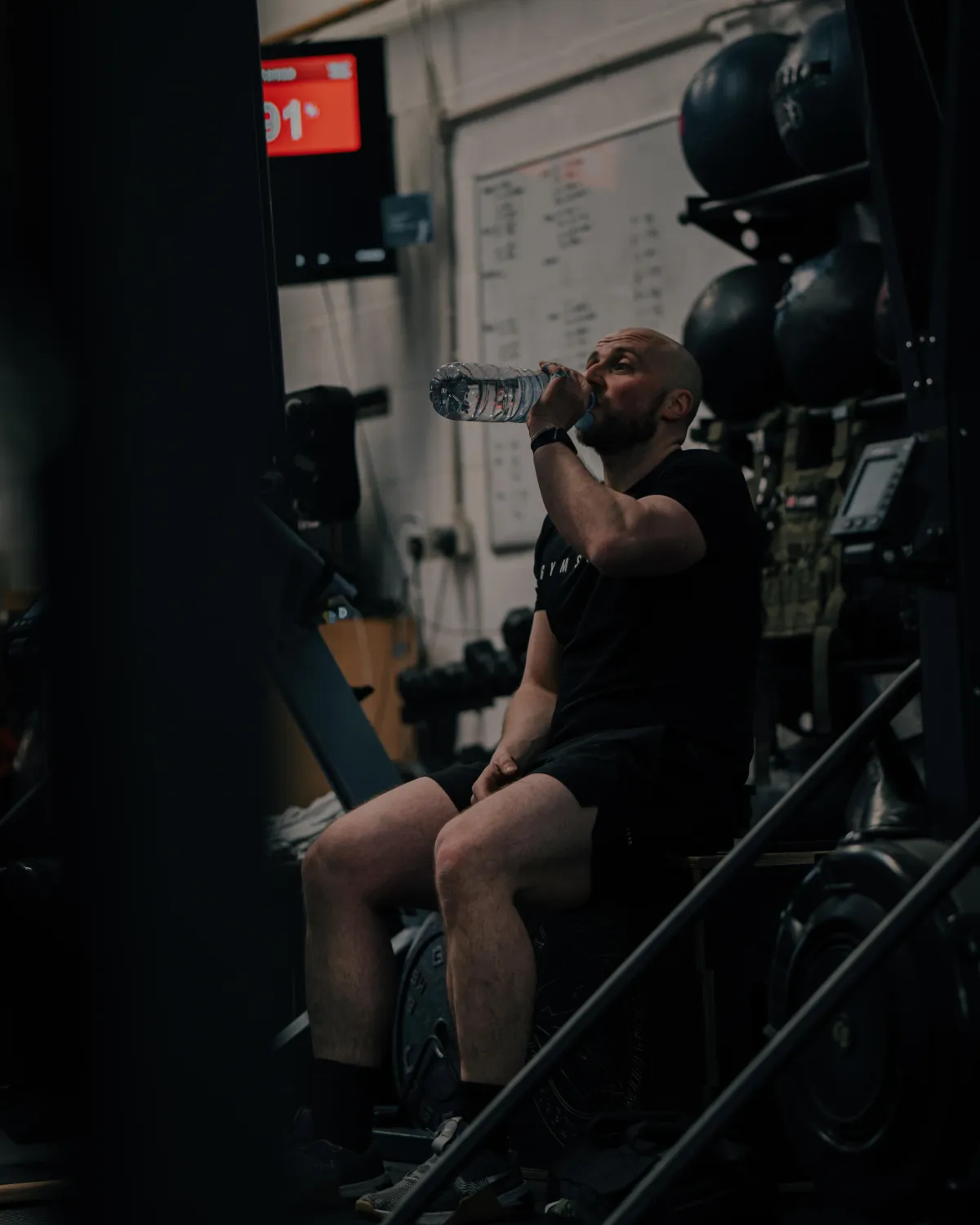
The Discipline of Recovery and Why Repair Builds Long Term Strength
The Discipline of Recovery: Why Repair Determines Your Long Term Strength
Strength is not built in training. It is built in repair.
Most people never grasp this because they are conditioned to equate effort with progress. They push, grind, strain and call it discipline. Yet their body tells a different story. Fatigue accumulates. Energy wavers. Performance stagnates. injuries appear. What they interpret as a lack of motivation is almost always a deeper issue
A system that has been trained harder than it has been allowed to recover.
Recovery is not passive. It is not luxury. It is not optional.
Recovery is the discipline that makes every other discipline possible.
The Uncomfortable Mirror
The truth is simple. Most people do not struggle because their training is inadequate. They struggle because their recovery is inconsistent, unfocused or entirely absent.
Look at the patterns
You sleep but never feel restored.
You train but never progress consistently.
You eat well yet feel flat or unfocused.
You push through fatigue instead of addressing it.
You treat aches as badges of honour rather than signals.
These are not random occurrences.
They are the mechanical consequences of ignoring the biology that keeps you alive.
People avoid recovery because recovery forces honesty
You cannot distract yourself with output.
You cannot define yourself by effort.
You cannot hide behind momentum.
You must face the truth of your internal state.
That is why recovery is the most avoided part of health.
The Inner Mechanism
Recovery is not simply relaxation. It is recalibration. Your nervous system, endocrine system, immune function, muscular repair and cognitive load all require structured restoration to operate with precision.
When recovery is neglected, the body enters a compensation loop
Cortisol remains high.
Inflammation increases.
Hormonal rhythms destabilise.
Muscular repair slows.
Energy output becomes inconsistent.
Focus becomes scattered.
Emotions become volatile.
People often blame willpower.
The real culprit is system fatigue.
Your body is not failing you.
You are asking it to perform without giving it the conditions required for performance.
Training breaks you down.
Recovery builds you back up.
Progress is the interaction between the two.
The Cost of Misalignment
Ignoring recovery does not simply stall physical progress. It erodes the foundations of your entire life.
When the body is under recovered
You misinterpret emotional signals
You make reactive decisions
You experience unnecessary friction
You lose clarity
You lose discipline
You lose direction
Your identity becomes unstable because your physiology is unstable.
Health is not a straight line from effort to outcome.
Health is a cycle
Stress
Adaptation
Repair
Expansion
Break the cycle and everything collapses.
Complete the cycle and everything compounds.
Most burnout is not an emotional problem.
It is a physiological reality created by recovery that never matched output.
The Identity Shift
High performers do not train harder.
They recover with the same intensity, clarity and structure they bring into their training.
Recovery becomes a deliberate act of strength
Sleep is non negotiable
Food becomes fuel
Hydration is consistent
Nervous system regulation is daily
Movement variability becomes essential
Rest days become strategic
Training intensity becomes intelligent, not emotional
This is not softness.
It is authority.
You stop acting like your body is a machine to dominate.
You start treating it as a system to lead.
When you embody this shift, your training becomes cleaner, your mind becomes sharper, your energy becomes stable and your health becomes predictable.
Your discipline stops being volatile and becomes sustainable.
Not because you tried harder.
Because you recovered intelligently.
The Practice
Today, choose one recovery behaviour that you have been neglecting and execute it with full authority.
It can be
An earlier bedtime
A deliberate mobility session
A planned low intensity walk
A hydration target
A nutrient dense evening meal
A true rest day
A cold exposure session
A breathwork practice
One action.
Not ten.
Recovery becomes discipline the moment it becomes deliberate.
Your strength is not measured by how much you can endure, but by how well you repair.

